

Freeze Alert: Take Action Before the Extreme Cold Weather Hits

The Cold Hard Truth.
Safeguard your home against the coastal deep freeze now.
Understanding the Threats of Coastal Cold
An 18°F low in the Myrtle Beach area is far beyond typical cold, placing stress on homes built for warmer coastal climates. When temperatures plummet this low, your energy consumption spikes, and the risk of costly damage—especially frozen pipes—increases dramatically. Don't just survive the freeze; protect your investment and manage your energy bill with these essential steps.
Part I: HVAC and Energy Management (The High Cost)
The largest spike in your bill will come from your heating system. Here’s how to manage it efficiently and safely.
Should My Heat Pump Be Running Almost All Day and Night?
Yes, and that's normal. Your heat pump is designed to run in longer, lower cycles to maintain temperature. When the outside air drops below freezing, the system works harder, and it will likely run near constantly. This is called continuous runtime, and it is preferable to constantly cycling on and off. Do not turn your heat pump off, as restarting the system requires a large energy surge.
The Auxiliary Heat Spike: Understanding Resistance Heating
At temps in the teens, your heat pump will struggle to pull enough heat from the outside air and will engage its auxiliary heat (often marked as "AUX" or "Emergency Heat" on your thermostat). This is essentially a giant electric space heater inside your air handler, works basically the same as your kitchen toaster. It's effective but more expensive, drawing up to three times the energy of the heat pump alone.
Expert Tip: Avoid large thermostat setbacks. If you normally set your heat at 68°F, don't let it drop to 60°F overnight, because turning it back up in the morning will force the auxiliary heat to run for hours.
The 6–9 AM Rush: Why You Should Delay Your Thermostat Setback
This addresses peak demand usage. Everyone wakes up and cranks the heat simultaneously, stressing the local grid.
The Smart Move: During this intense cold snap, keep your thermostat steady—even overnight (maybe at 67°F or 68°F or whatever temperature is comfortable to you). If you must set it back, only drop it by a couple degrees by 6 AM and start the morning "recovery" period at 9 AM. This allows the heat pump to do the work, reducing reliance on the high-cost auxiliary heat during the peak morning demand. Keep in mind that the heat inside your home helps to keep the interior pipes and fixtures along exterior walls warm as well, so don’t turn down the thermostat too far.
Make Sure Air Filter is Clean or Replaced
This is simple maintenance that pays huge dividends. A clogged filter restricts airflow, forcing your blower motor and heat pump to strain. During this intense cold, reduced airflow means less warm air is distributed through your home, making your auxiliary heat run longer just to keep up. A clean filter ensures maximum heat distribution, keeping your system efficient.

Change the furnace air filter every 4-6 weeks or as needed to maintain air flow.
Part II: Weatherization (Damage Prevention & Control)
Critical Alert: The Burst Pipe Threat
If your pipes are properly insulated, you can skip ahead. While coastal homes may not experience prolonged freezes, a sudden, deep drop to the teens presents a severe risk of freezing and bursting pipes, especially those running through unconditioned spaces like attics, crawl spaces, garages, or exterior walls.
The damage caused by a burst pipe—water damage, mold, and structural compromise—is often far more expensive than any energy savings. All pipes should be properly insulated. If pipes are poorly insulated, contact an insulation or plumbing professional to correct. Immediate preventative action is essential for poorly insulated pipes:
Steady Drip: Allow a very slow, steady drip of water from faucets that are fed by pipes running through exterior walls. Moving water is much harder to freeze than stagnant water. A continuous drip is enough to relieve the pressure buildup that causes the pipe to burst if the water inside freezes.
Open Cabinets: Keep kitchen and bathroom cabinet doors open, especially those on exterior walls. This allows your home's conditioned air (and heat) to circulate directly against the plumbing, helping to keep the pipe temperature above freezing.
Locate the Main Shutoff: Before the cold hits, ensure every member of the household knows where the main water shutoff valve is located. If a pipe does burst, shutting off the water quickly is the single best way to minimize thousands of dollars in water damage.
Insulate Vulnerable Spots: Though we removed the specific point, it bears repeating: use covers on any pipe or hose bib you find in an unheated area that cannot be drained.
Though these actions may be beneficial as temporary measures, the only correct solution is fully insulated pipes.
Cover Exterior Faucets (Hose Bibs)
Disconnect all hoses, drain completely, and store for winter. Use foam-insulated bib covers (available cheaply at any hardware store). This protects the spout and the small, vulnerable section of pipe that extends into the wall cavity. Be sure the bib cover has a thick gasket and makes solid contact with the exterior wall.
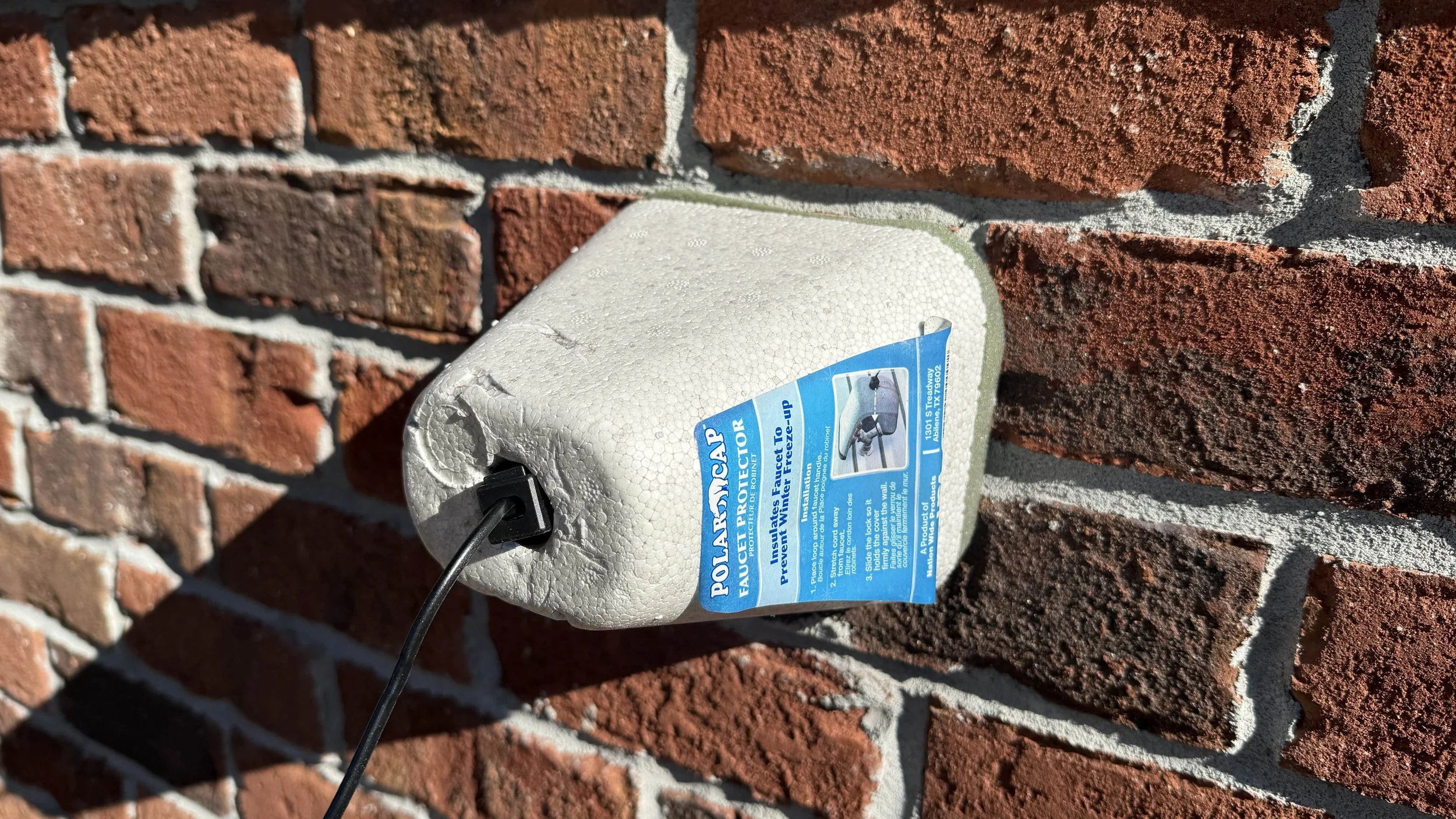
Prevent freezing at the hose bib with a faucet protector cover.
Find One of Your Biggest Leaks: Why the Fireplace Damper Matters Now More Than Ever
If you are not actively using your fireplace, the damper must be fully closed. An open damper is a massive, uninsulated hole in your thermal envelope, acting like a chimney that constantly sucks the heat your HVAC system is generating right out of the house. Seal the chimney top or use a temporary chimney plug if your damper seal is poor.
Seal the Envelope: Door Weatherstripping, Locked Sashes, and Garage Doors
The combination of extreme cold and wind can turn small gaps into massive leaks. Focus on these three major culprits:
Doors: Check the weatherstripping around exterior doors. With low temperatures you can easily feel drafts with your hand or cheek. Replace any weatherstripping as needed.
Windows: Ensure all window sashes are fully locked. Locking the sash compresses the weatherstripping and pulls the window tighter into its frame, which is often the most effective way to stop small leaks.
Garage Door Seal: Though often outside the thermal barrier, it’s worth noting that f you have an attached garage, check the large rubber seals on the bottom and sides of the garage doors. An unsealed garage allows frigid air to rapidly cool the wall, floor, and plumbing lines shared with the living space. The interior door to the garage should also have operation gasket weatherstripping to stop air flow.
Set Ceiling Fans to Run Clockwise at Low Speed
Heat rises, and in a home—especially one with vaulted or cathedral ceilings—this effect is significant. To reclaim that wasted heat, set your ceiling fans to run on a low speed in the clockwise direction. This gently pulls the cooler air near the floor up and pushes the warm air collected near the ceiling down the walls and back into the living space, improving comfort without touching the thermostat.
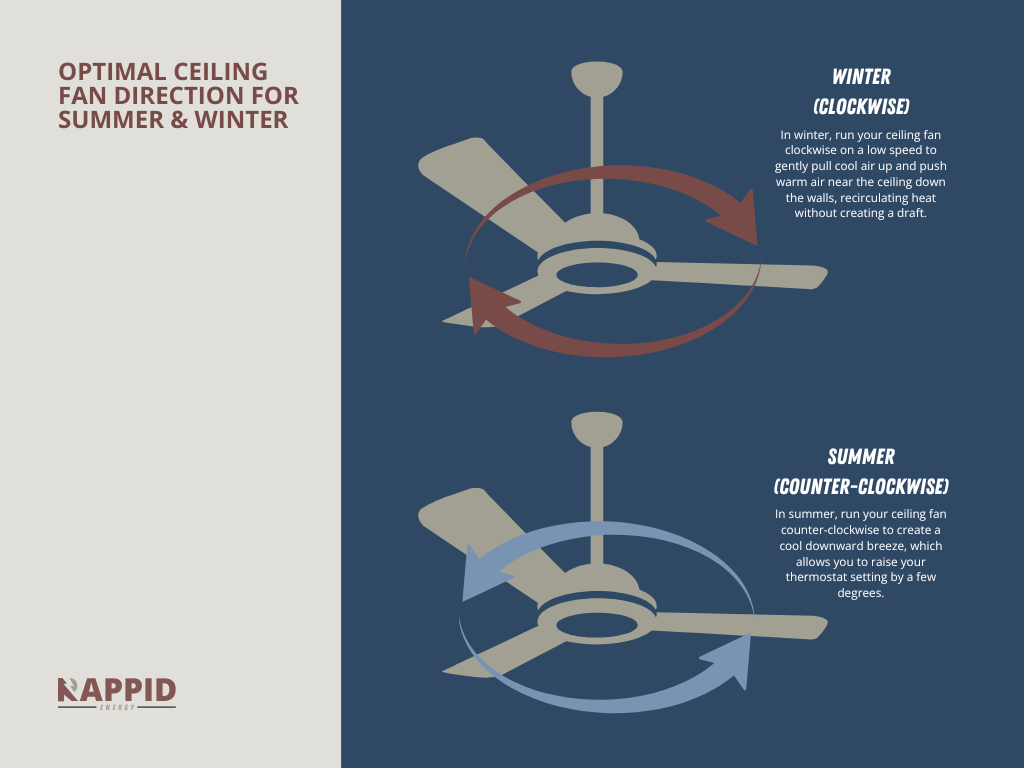
Don't let precious heat get stuck near the ceiling. Switch to CLOCKWISE and LOWSPEED to recirculate heat and ease the load on your heat pump.
Bring Pets Indoors
While not strictly an energy tip, this is the most critical safety reminder, bring pets indoors. Even pets adapted to the outdoors need a warm, sheltered environment when temperatures drop below freezing. Their safety is always the number one priority.
Putting It Off Costs More 💸
If you are concerned about your HVAC system's ability to handle this freeze, or if you suspect you have major leaks that could lead to damage, contact Rappid Energy now. We'll provide the expert solutions you need to help you weather the cold efficiently and safely.