

Holiday Fire Safety Check: Is Your Electrical System Ready for the Christmas Load?
Watt a Wonderful Life.
Before you plug in the whole Winter Wonderland, ensure your circuits can handle the holiday load.
The Christmas season is the most demanding time of the year for your home's electrical system. Between thousands of lights, inflatable decorations, extra cooking appliances, and electronic gifts being plugged in simultaneously, it’s easy to push circuits beyond their safe limits.
Before you plug in that last string of lights or fire up the electric carving knife, take a moment to ensure your wiring is ready for all the additional load. This isn't just about saving money—it's about preventing the serious risks of tripped breakers, damaged electronics, and electrical fires.
The Overload Warning: Recognizing the Red Flags
When a circuit is drawing more power than its wiring is rated to handle, it becomes overloaded. This is the primary cause of electrical fires during the holidays. Knowing the warning signs is the first line of defense:
Tripping Breakers: If a breaker trips every time you plug in your tree lights and microwave simultaneously, that circuit is overloaded. The breaker is doing its job, but the solution is to redistribute the power draw, not just reset the breaker repeatedly.
Dimming or Flickering Lights: If your regular interior lights dim noticeably when a large appliance (like a deep fryer or a new electronic toy) turns on, it indicates a significant power draw nearby that is taxing the circuit.
Warm Outlets or Cords: If an outlet or any part of a cord feels warm to the touch, unplug the items immediately! Heat is a direct sign of excessive resistance and overload.
Burning Smell: Any faint burning smell near an outlet or a power strip requires immediate investigation and disconnection.
Extension Cord Safety: Know the Limits
Extension cords and power strips are essential for holiday decorating, but improper use can quickly lead to hazards.
Check the Wattage: Every extension cord has a maximum wattage rating. Add up the wattage of the devices you plug into it and never exceed the cord’s limit. Use heavy-duty, thicker-gauge cords for outdoor lights and high-draw appliances.
No Daisy-Chaining: Never plug one extension cord or power strip into another. This "daisy-chaining" bypasses safety mechanisms and can lead to a severe overload on the first cord and outlet.
Indoor vs. Outdoor: Use cords clearly labeled for outdoor use for exterior displays (sometimes marked with a “W” for weather). Outdoor extension cords will always have 3-prong plugs. Indoor extension cords lack the insulation to handle moisture and extreme cold, creating a shock and fire hazard. Indoor extension cords may have 2- or 3-prong plugs.
Avoid Running Under Rugs: Running cords under rugs or furniture prevents heat from dissipating and can wear down the cord's insulation, creating a fire risk.

A general comparison of indoor versus outdoor extension cords. Always check the packaging or tag to find specific ratings for water resistance, indoor/outdoor use, voltage, etc.
The LED Advantage: Easing the Load
If you haven't switched to LED holiday lights, now is the time. It is the single most effective way to reduce the strain on your electrical system and dramatically cut your electricity bill.
Power Comparison: An average string of incandescent lights may draw around 40 watts. A comparable string of LED lights draws only about 4 watts. You can safely connect ten times as many LED strands as incandescent ones on the same circuit. In fact, some manufacturers claim you can string as many as 50 strands together. Always check the manufacturers safety limits on the tag or box, and use caution when mixing brands as the safety features and limits may not be compatible.
The Heat Factor: Incandescent lights produce significant heat, which can pose a risk when woven through dried-out Christmas tree branches or decorations. LEDs convert most the electricity to light instead of heat, and are a safer and often brighter choice.
Light It Up: Some folks are hesitant to use LEDs because they don’t like the glaring white color of the light. LEDs are now available in most color temperatures from a warm 2700K (Kelvins is the unit of measure) to a cool 6000K so you can select a color and brightness that reflects your style.
Space Heater Safety: The Holiday Guest Risk
If you have guests staying over and using portable space heaters in spare rooms, remember that these are major power hogs and require specific safety measures:
Dedicated Circuits: Space heaters should always be plugged directly into a wall outlet, not into an extension cord or power strip. They should ideally be used on a dedicated circuit that is not simultaneously running lights or other heavy appliances.
The 3-6 Rule: Keep all flammable materials—including wrapping paper, curtains, furniture, drapes, and holiday decorations—at least three feet away from all sides and back of the space heater. Ensure no objects are at least six feet away from the from of the space heater.
Automatic Shut-Off: Only use modern heaters equipped with a tip-over shut-off feature and an automatic thermostat that prevents overheating.
Temporary: Space heaters should be a short term or emergency supplement only. If your home or a specific room is too cold, it’s likely a problem with air sealing, insulation, or ductwork. Contact Rappid Energy today to determine the root cause so you can eliminate the space heater and increase your comfort.
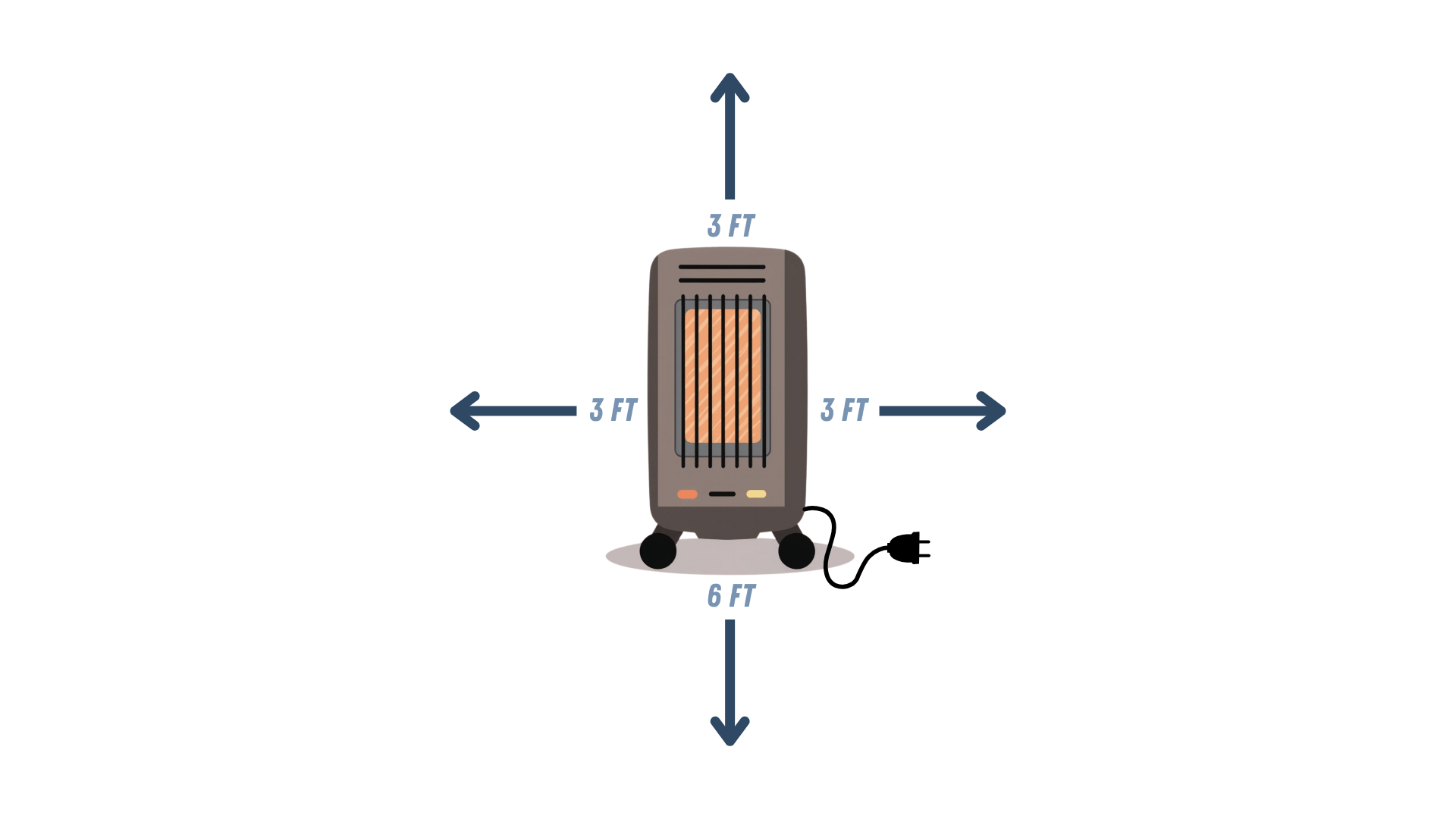
Keep flammable items away from the space heater. Allow 3 feet of clear area around all sides of the space heater, with 6 feet of clear area.
Exterior Outlet and Display Check
Before you set up your outdoor Winter Wonderland, ensure the safety features are active.
GFCI Protection is Non-Negotiable: All exterior outlets must be Ground Fault Circuit Interrupter (GFCI) outlets. These devices monitor the current and trip the circuit in milliseconds if they detect moisture or a short, preventing electrocution. Test your GFCI outlets by pushing the "Test" button—it should trip the circuit immediately.
Seal and Cover: Ensure outdoor connections are secured in waterproof casings or covered to prevent rain and snow from penetrating the plugs and sockets.
Merry Christmas and Happy Holidays!
The holidays are meant for friends, family, and cheer, not fire hazards and tripped circuits. A simple safety check now—redistributing your lights, switching to LEDs, and checking those exterior GFCIs—is the best gift you can give your home and your family this season.
Do you have any questions about safely handling high-wattage kitchen appliances or smart plugs for your holiday setup? Contact us at Rappid Energy today!